
Previously: From Eyre to Onegin (2012)
NOTE: This post contains spoilers for both novels.
I recently finished my first Henry James novel, Washington Square (1880). I have often heard tough things about James’s style, but I picked up this book with great anticipation, having watched the 1949 adaptation called The Heiress. Olivia de Havilland led an incredible cast through a story that melted my heart in a way I had not felt since reading Eugene Onegin (1833). And, as I consider it further, the two novels share a great deal in common.
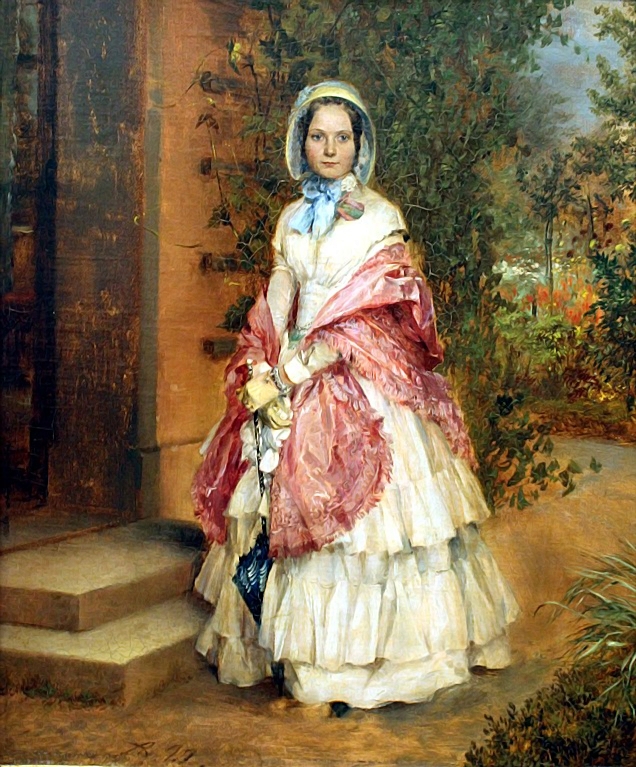
Alexander Pushkin’s novel-in-verse has simple beginnings: a young, bookish woman catches feelings for her new neighbor, the bored and worldly Eugene Onegin. In a similar vein, shy Catherine Sloper discovers a world outside her home in Washington Square when she meets Morris Townsend at a party. Spurred by the rush of first love, each woman finds her latent courage in the pursuit of her dream—Tatyana to declare her feelings to Eugene, and Catherine to promise herself to Morris. The drama in their respective families threatens to sabotage their happiness, but a more devastating obstacle makes its appearance: the true natures of the men they have put all their faith in.
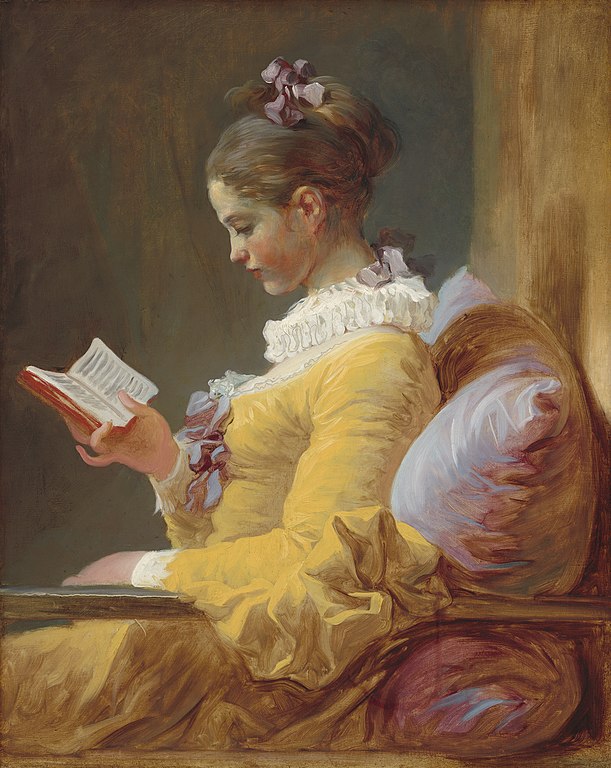
It is remarkable how many 19th-century novels feature the theme of novels as a poor influence. Most notably, of course, is Oscar Wilde’s The Picture of Dorian Gray, in which the protagonist follows a downward path through the wrong friends and the wrong books. We see a different kind of the same warning in Eugene Onegin and Washington Square. Tatyana’s mother and Catherine’s Aunt Lavinia are both romantics, the one resigned to her loveless marriage (“Habit was given us in distress / By Heaven in lieu of happiness,” XXXI) and the other to ever-increasing romantic fantasies, in which Catherine is merely a puppet. As for our young heroines, romantic literature widens the scope of their limited existence while setting them up for impossible expectations.
For it is only through an idealistic veneer that poor Catherine and Tatyana could look upon these idle young men and see heroes. Morris Townsend is fresh from Europe, having left everything behind him except his charm, good looks, and persistent unemployment. Eugene Onegin is another man-about-town, not even thirty and already jaded, whose coldness towards Tatyana does not preclude him from revealing some feelings for her, even as he puts her back in her place. Both women are inevitably crushed by rejection, overburdened by family pressures, and shaken from their dreams by mundane reality—where money, status, and parental wishes take precedence over personal feelings.
After she is coldly turned down by Eugene, Tatyana loses her fleeting courage. Her family packs her off to Moscow, where eventually she resigns herself to a dutiful marriage to an old general. Catherine, on the other hand, recovers from Morris’s “slow fade” by pursuing a new, independent life for herself.
The Doctor exercised no further pressure, and had the credit of not “worrying” at all over his daughter’s singleness. In fact he worried rather more than appeared, and there were considerable periods during which he felt sure that Morris Townsend was hidden behind some door. “If he is not, why doesn’t she marry?” he asked himself. “Limited as her intelligence may be, she must understand perfectly well that she is made to do the usual thing.” Catherine, however, became an admirable old maid.
Catherine’s gentle singleness rises to a splendor on parallel with that of Tatyana’s celebrity marriage. In works of charity and love to her neighbors, the young woman in Washington Square ages elegantly into a wise and beloved figure in the community.

When Eugene Onegin returns to Russia and sees Tatyana as a rich and beautiful princess, his admiration is rekindled. Like Morris, he tries to win his admirer back, now that she has become a prize to win—and perhaps for some remnant of feeling that has grown stronger now that he, too, has had to experience bitter solitude. He calls upon her after sending her a letter that (with Pushkin’s keen sense of irony) mirrors Tatyana’s girlish letter in its desperation.
If ye but knew how dreadful ’tis
To bear love’s parching agonies—
To burn, yet reason keep awake
The fever of the blood to slake—
A passionate desire to bend
And, sobbing at your feet, to blend
Entreaties, woes and prayers, confess
All that the heart would fain express—
Tatyana still loves Onegin as before, but her convictions forbid her from running away with him. His passion falls flat before her plain reminder to him of how he treated her and that she has now made other vows. The reader feels her pain but also a sense of poetic justice, as the once-conquered country girl is now the one holding the cards, yet playing by the same rules she always has.
Though equally triumphant, the moment Morris and Catherine meet is not so emotional. Morris has lost his good looks, and Catherine has lost her naivete forever. Whatever she might have tolerated from him before, she will not now.
She continued to look at him, however, and as she did so she made the strangest observation. It seemed to be he, and yet not he; it was the man who had been everything, and yet this person was nothing. How long ago it was—how old she had grown—how much she had lived! She had lived on something that was connected with him, and she had consumed it in doing so.
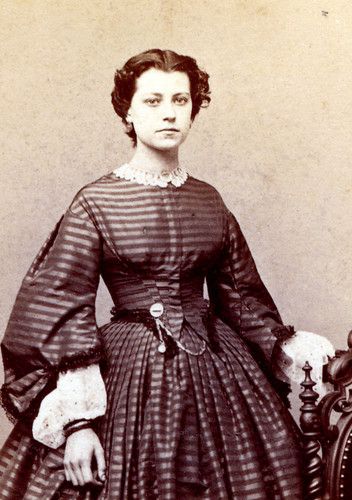
Constancy and devotion are each heroine’s strengths, leading them at first into pitfalls of misplaced affections, but also upward into moral dignity and grace that cannot be supplied by earthly forces, least of all by the men they love. Pushkin and James, both insightful male authors, paint a haunting picture of family expectations and the strictures imposed upon women in their time. One mourns such a culture where these social tragedies occurred, where a woman’s entire trajectory could lie at the mercy of her parents or suitors. But the plight of Tatyana and Catherine is still a noble one—evergreen stories of lost innocence and young women growing up to discover their own worth.


 Classics Considered
Leave a comment