
An audio version of these thoughts can be found on YouTube.
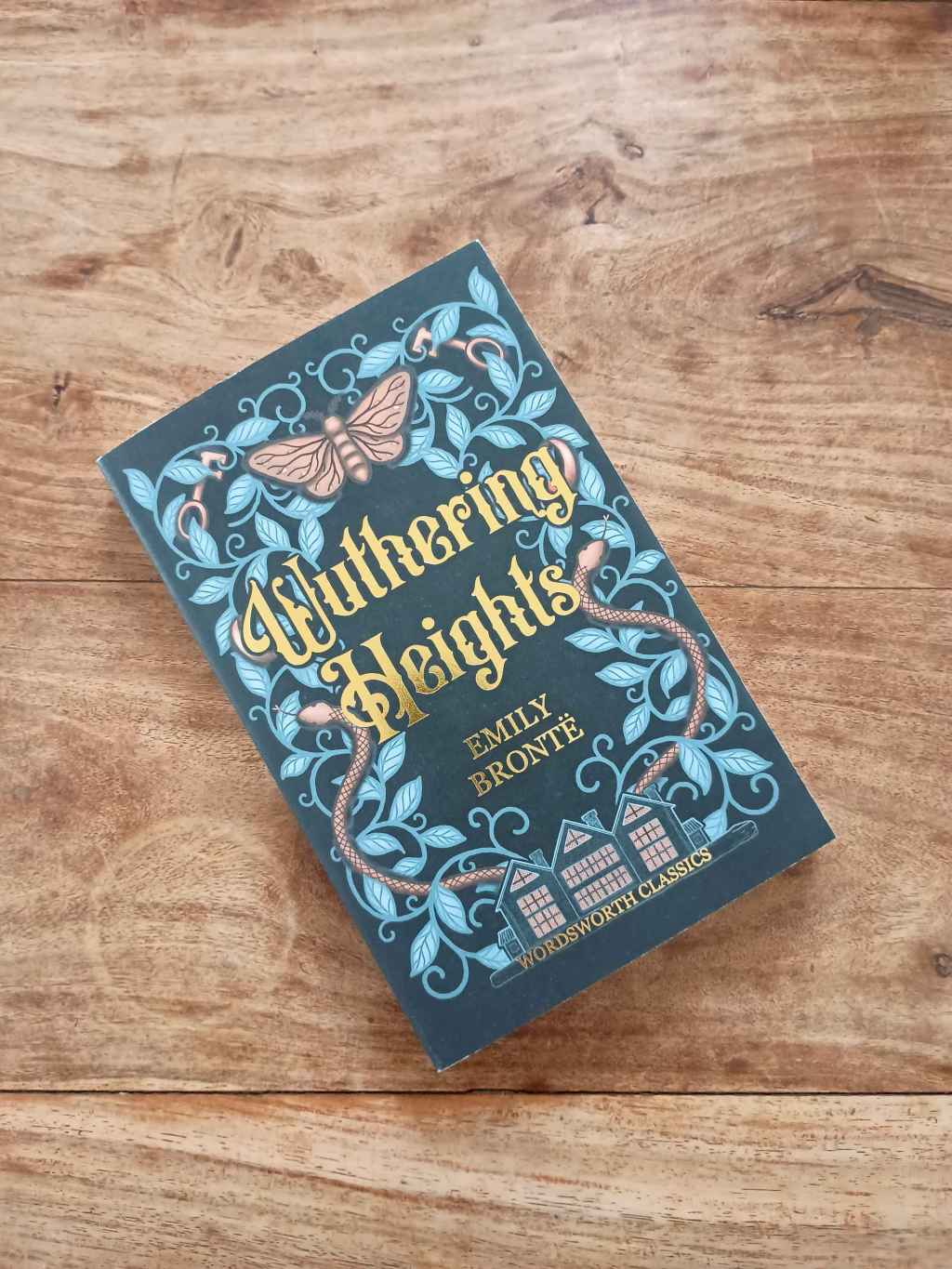
I’m currently rereading Wuthering Heights with Mr H and wanted to share some thoughts as I go along (like in the good old days with The Brothers Karamazov).
My background with the book
I first read WH when I was about 12 or 13. I was just starting to explore classic literature as a tween. I fell in love with Jane Eyre and wanted to read more of the Brontë sisters. At the time, I liked linear stories with plenty of drama and loveable characters.
I read WH 2 or 3 times. It was a very worn-out paperback copy that we’d gotten from someone. I read very fast in those days and didn’t look at notes (don’t even think that edition was annotated), and it was before I used the internet much. I found the drama to be gripping, but the story and characters confused me entirely (in spite of rereads), and I overall disliked it.
20 years later, I have been meaning to reread the Brontes and especially curious to see if my experience with WH changes, now that I have a bit more reading and life experience behind me.
Chapters 1–5: Three Observations
- I never realised before that WH is historical fiction. The frame story starts about 46 years before its publication date (1847), and the flashbacks occur even earlier in the late 1700s. This changes my expectations of how the story will be told. Historical fiction of this kind will often take on the aspect of romance (lowercase r), and the Gothic element fits in naturally. We aren’t poised to expect a piece of contemporary realism like Agnes Grey, nor even a Victorian Gothic like Jane Eyre.
- This book is violent up front. What a difference from The Tenant of Wakefield Hall where Anne takes great pains to ease a hostile audience into her story. Emily just goes for it. The d word isn’t dashed, she saves the dashes for even stronger language. This is pre-Victorian era after all.
- Much has been debated about the casting of Heathcliff in the latest film adaptation. I’ve not seen the film but in just 5 chapters I think it’s clear behind doubt that Heathcliff is meant to be black, Romani, or some other non-white or mixed race person. It’s not just in the very clear language used to describe him, but also in the way he is treated and dehumanised. In fact Nellie refers to him as an “it” before he is christened. Though I understand that Irish and Italian people (for example) are sometimes described as “dark” (as in, dark haired) in old novels, nonetheless the descriptors here and contextual information are much more explicit about Heathcliff being a different race. I think the reason it’s been historically understated or even discounted is due to the fact this necessitates a mixed-race relationship with Cathy, which would have been largely taboo up until the mid-late 20th century. He is not a pleasant character by any means so it’s not the best “representation” as such. But I think the text demonstrates Emily’s clear intent to feature a character of a different background, and perhaps the impact of racism in a child’s life.


Leave a comment