
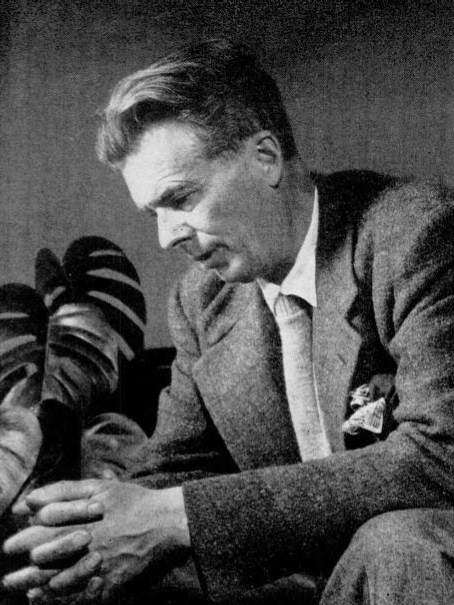
I’ve been reading as slow as a tortoise, but I did manage to finish The Oresteia and Huxley’s Ends and Means.
The Oresteia
As a friend pointed out to me, it’s important to recognize that these plays were religious plays, first and foremost. For me, their strong religious and cultural underpinnings resulted in a divide I could not bridge. By the time I got to The Eumenides, the sexist undertones from the previous plays had ballooned to such an extent that the female antagonist was painted as the ultimate villain, her motherhood rendered meaningless and her motives given no full consideration. I did appreciate the portrait of an early “democracy” of sorts, but the voting was actually a rather small part of the play—much time was spent on talking to the Furies, who lost their pizzazz as soon as they were appeased. While a reader shouldn’t measure old texts by modern standards, neither does a reader have to enjoy them, if best efforts towards that end fall short. The same friend recommended seeking out some commentary, so when or if I attempt Sophocles’ Antigone, I may do that. I’ll need to be in the mood to immerse myself in this culture again, though, which (admittedly) is not high on my list.
Ends and Means
Huxley’s lesser known book—on war, peace, and socialism—was really interesting, and I only fear I won’t be able to do it justice in a review. So many of his ideas are still fresh 86 years later and (disappointingly) so many of his warnings continue to go unheeded. Parts of the book are sheer brilliance and other parts are a drag. It felt like he took on too large a scope for a single book and certain topics seemed woefully out of his depth. Naturally, this reader didn’t care for his grim view of Christianity at large, nor was it always well supported by his arguments. His views on war, government, and education were more to my liking, and those chapters were downright inspiring, albeit with the wistfulness that good ideas rarely gain enough traction to change the world.
I am now reading another of his works called An Encyclopedia of Pacifism. This thin volume served as a tract for the Peace Pledge Union, a pacifist group Huxley was part of during the contentious interwar period. (This group was understandably controversial, taking some unpopular stances during the rising tensions between Germany and the UK.) I was worried this book would be too much of a repeat of Ends and Means, but apart from some occasional overlap, I feel like Huxley’s Encyclopedia contains a lot of interesting historical notes, to the extent that I’ve ordered my own (second-hand) copy.
Because Huxley was such a prolific and passionate pacifist, I plan to read one or two more of his novels that deal with his ideas: Eyeless in Gaza, Island, and of course Brave New World (reread). Maybe I’ll even get a brief biography to peruse. And instead of writing reviews for each of his works, I feel it might be more interesting (and easier) to go about it topically, taking subjects from Ends and Means and adding asides from Encyclopedia and maybe the novels as well.
A deep exploration of Aldous Huxley’s views was not in the menu for my War & Pacifism reading project, but I am absolutely fascinated by someone who took such bold and risky views in the 1930s, when a second war was already on its way. I don’t know that I would have agreed with him at the time, yet when I recall the horrific carnage of WWI—and what it did to a whole generation and those “genteel” societies—I readily understand why the Peace Pledge Union existed and held such devoted members. It’s worth noting that this group was not only anti-war, but they were pro- a lot of other things. They saw war as something intrinsic to the societal structures of their day; thus, making changes to the structures was imperative for true pacifism.
That’s all I’ll say about this for now. It is a forgotten chapter on the “wrong side of history” that I am looking forward to understanding better.


 Classics Considered
Leave a reply to Marian Cancel reply