
I celebrate myself,
And what I assume you shall assume,
For every atom belonging to me as good belongs to you.
It is a dark January night and I meant to make a YouTube video about this, but I am very tired and cold, so I will write a few words instead.
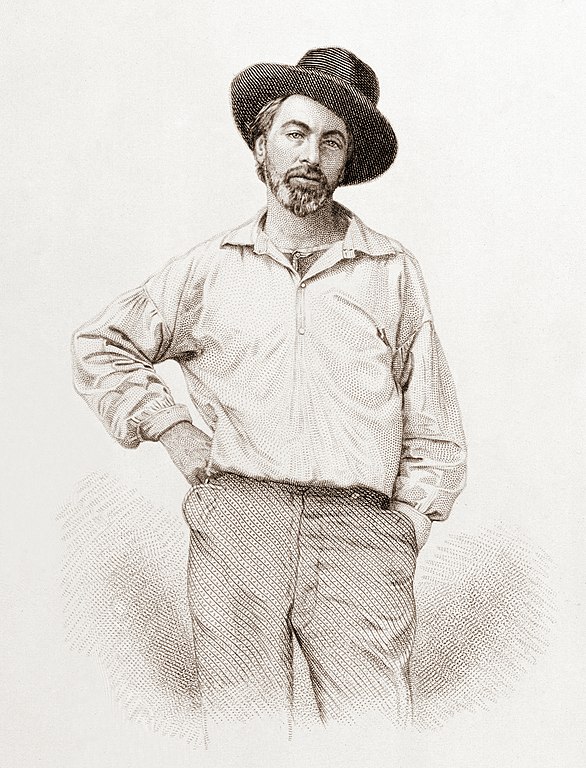
After a lengthy and grandiose essay, Whitman’s Leaves of Grass (1855) moves from its introduction to its opening lengthy poem, later to be known as “Song of Myself.” A few lilting lines pull the gentle reader into a kaleidoscopic free verse exploration of America (and beyond)—its people, its places, and its nature. The omnipresent, god-like narrator writes of himself but also not of himself: he inhabits every being in the tale, as well as all good and evil events. We are taken to every corner of the country and into every experience, both glorious and wretched. Love, hate, lust, and violence are all represented in the parts which make up the seamless whole.
This poem was quite the experience, and overall I loved it. Free verse with clear rhythm, alliteration, and other poetic devices is one of my favorite things to read. The descriptions of flora and fauna are visceral. The theme of the oneness of all things—especially between classes and races—was certainly unconventional for its time, both socially and spiritually. The sexual language, at times unintentionally funny, was provocative enough that (along with other poems in the collection) it may have cost Whitman his day job. In any case, there is hardly a lull in “I Celebrate Myself.” You will be intrigued, awed, shocked, and even comforted.
While I embrace the monotheism which Whitman so strongly rejected, I feel a warmth towards the beauty of his writing and the spirit of liberty which it exudes. This poem teased out a bit of American pride from me, where I thought I had none. I do not know what the rest of the book has in store, but “I Celebrate Myself” stands well on its own and is well worth the read.


 Classics Considered
Leave a reply to Marian Cancel reply