
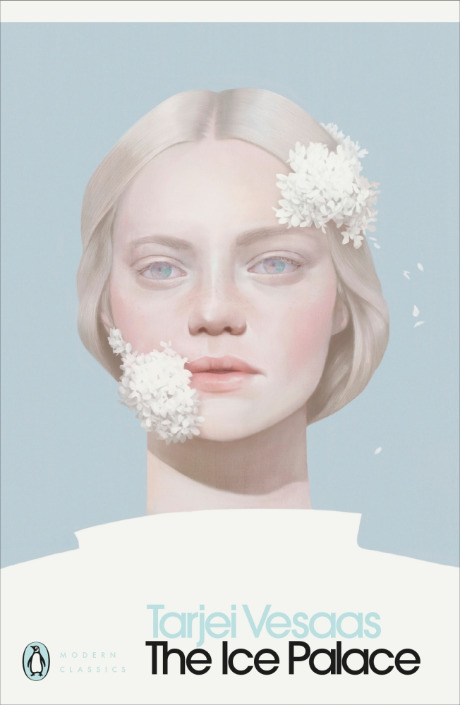
The Ice Palace first crossed my path in 2023, and I was instantly reminded of it after reading Anna Kavan’s Ice a year ago. This Norwegian novel was absent from my American libraries, but fortuitously, I was able to find it after moving to the UK.
In The Ice Palace, we meet Sissi, a young and popular schoolgirl who develops an affection for and fascination with another student newly arrived. Unn is an orphan who keeps to herself, yet draws Sissi into her life almost immediately and nearly wordlessly. Unn’s disappearance on a snowy autumn day brings upheaval to the school and casts a long shadow over Sissi’s life that she cannot seem to escape.
This book reminded me less of Kavan’s novel and more of Picnic at Hanging Rock, the haunting Australian classic by Joan Lindsay. I had just seen the 1975 adaptation of Picnic, so perhaps some recency bias is at play. But both Picnic and The Ice Palace are stories about disappearances, and both focus more heavily on those left behind than those missing. A similar thread of uneasiness runs throughout both novels, even though the scenes of actual horror are few and far between, and largely absent from Vesaas’s book.
While the sapphic themes of Picnic at Hanging Rock are merely hinted at (and mostly in the film), they are overt in The Ice Palace. Even considering it was written in the 1960s, it is impossible for me to interpret the relationship in this novel as anything but a lesbian romance, albeit in the confused and half-formed way of a first sexual experience. This is easily evidenced by many passages in the text, especially in Sissi and Unn’s first private interaction (but also in Sissi’s subsequent interaction with another schoolgirl). These moments are written in such plain language that I cannot set it down to a mistranslation. The girls are only about 11 years old, and this plot was conceived by a straight man in his 60s—a combination of facts I found to be extremely off-putting. Perhaps some readers’ insistence on its being a friendship is predicated on the thought that if it isn’t a friendship, was Versaas perhaps a bit of a pervy old guy?
Having moved past this initial unpleasantness (and likely to DNF the book if it continued), I found that the majority of the novel is about loss and grief as understood through the eyes of Sissi. How the plot illustrates her denial and mirroring of Unn is deeply poignant and true to life. Conversations with other characters—be they her parents, Unn’s aunt, or a kindly schoolboy—are the catalysts for each pivot in her journey through grief. But through her desperate loyalty to Unn, Sissi loses more and more of what made her Sissi, while taking on more of the missing girl’s persona. The dangers of not letting go are painfully delineated in her plight.
I had high hopes for the icy imagery of the novel, but to be honest, I felt disappointed. While Kavan used landscape and architecture to great effect in Ice, it seemed like the endless descriptions of the Ice Palace had very little to say in the end. I was more struck by smaller descriptive scenes, such as the darkness on the sides of the road as Sissi approached Unn’s house. Versaas seems to excel in the smaller motifs rather than the grand metaphors.
In the end, I found things to appreciate in The Ice Palace, but I found it to be a bit problematic (and sometimes, just plain boring). I would consider reading more of the author’s work, simply because he was a Nobel Prize nominee and possibly I started at the wrong end of his oeuvre. Either way, a mixed experience, and just 2 out of 5 stars for my Goodreads rating.


 Classics Considered
Leave a reply to The Anomalous Host Cancel reply