
Here’s a quick look at some books I’ve read in the last week or two.
Just-Read
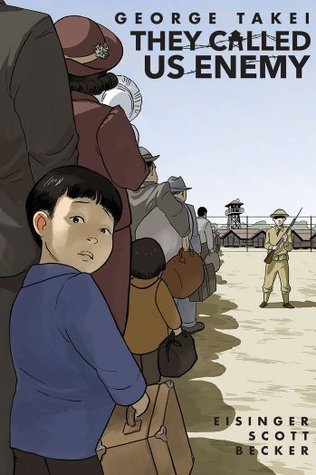
They Called Us Enemy by George Takei – Graphic novels are not my usual fare, but I had to read this account by Takei (Sulu, Star Trek TOS) about his experiences as a Japanese American during WWII. I knew that the internment, ordered by FDR, was bad, but I didn’t realize how bad. Families were torn from their homes and held in horse stables, later relocated to heavily guarded camps and treated like prisoners. Even worse, many were coerced into giving up their citizenship and leaving the US for Japan, to be “legitimized” as the enemy. I was moved, angered, and heartbroken by Takei’s story. The illustrations were helpful, showing the scenes from an innocent child’s perspective, which is how he remembers it. I didn’t care for the contemporary politics at the end of the book, but that aside, I feel this is a great and important memoir.
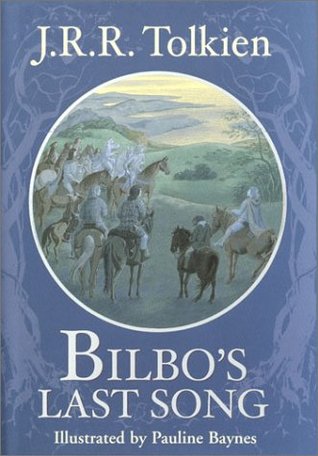
Bilbo’s Last Song by J.R.R. Tolkien – There is not much to say about this one. It’s a very short poem with some beautiful illustrations by Pauline Baynes (of Narnia fame). Not worth buying; I read it from the library ebook collection.
My Twentieth Century Evening and Other Small Breakthroughs by Kazuo Ishiguro – Ishiguro is my favorite writer, if we’re talking about the art of writing, so I was thrilled to read his Nobel Prize address. There were some great thoughts in this little book. The main idea that stood out was his striving for three-dimensional character relationships. So not simply having a great character arc, but also multiple facets of how one character relates to others. The second fascinating idea was this quote:
What exactly are the memories of a nation? … Are there times when forgetting is the only way to stop cycles of violence, or to stop a society disintegrating into chaos and war? On the other hand, can stable, free nations really be built on foundations of wilful amnesia and frustrated justice?
Takei’s book re-solidified my conviction that we must avoid this “amnesia” which only remembers, say, the good things FDR did. But we must have both justice and forgiveness; neither one can stand alone.
The one thing I disliked about this speech was that, towards the end, Ishiguro made it sound like he doesn’t consider himself as a relevant author anymore. I don’t know why he would say that. I find his 20th-century Japan novels to be his best work so far and absolutely relevant to modern-day issues. I’m also looking forward to his upcoming book, Klara and the Sun.
The Setting Sun by Osamu Dazai – This was my first impression of Dazai, and I’m afraid it wasn’t good. This book has strong Southern Gothic vibes, although the setting is Japan after WWII (yes, I’m in a reading phase 🙂 ). The plot and characters are heavily nihilistic, and the female narrator left me unconvinced. I liked his writing style well enough to try more of his novels, but this one didn’t do anything for me.
The Father by August Strindberg – I read this last night and I’m still trying to figure out what the message is. It was a very bleak family drama about parental rights and identity. Very interesting historically but so depressing.
Currently Reading
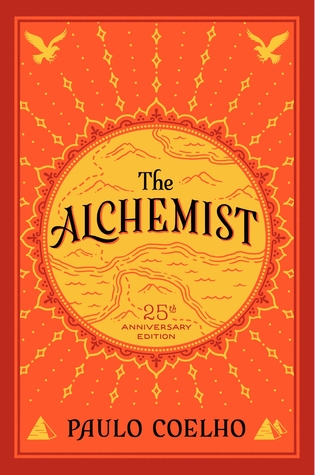
The Alchemist by Paulo Coelho – I’m sort of struggling through this little book, simply because it’s about destiny, and destiny is a topic I’ve been grappling with. I don’t know if I believe in it anymore—call it an existential crisis. Honestly the only way for me to be grounded here is to go back to Scripture, which is my next step. I plan to finish The Alchemist, but I am not sure if I’m in a good headspace to review it. 😉
Is That Kafka? 99 Finds by Reiner Stach – I was overjoyed to see my library had the ebook of Is That Kafka? Stach wrote a massive three-part biography of the man, and he presents 99 of the interesting tidbits in this book (with pictures!). So far, I’m enjoying this. It really humanizes Kafka and helps to contextualize his personality in the era he lived and his everyday life.
Well, that’s what my late October reading looked like. How about yours?


 Classics Considered
Leave a reply to Sharon Wilfong Cancel reply