
It is almost May. Between work and life and everything in between, there’s hardly room to breathe, but I am making more time for reading and crawling steadily out of the rut. ❤
The Lucy Poems
This month, I was asked to supply some poems for a book club, and I put forward the “Lucy” poems by William Wordsworth. It wasn’t a huge success with the group, but these are personal favorites of mine and I was happy to read them again. Wordsworth’s poetry always seems to me to embody wistful determination, like delicate flowers climbing up out of the cold ground.
She shall be sportive as the fawn
That wild with glee across the lawn
Or up the mountain springs,
And hers shall be the breathing balm,
And hers the silence and the calm
Of mute insensate things.
This was not a collection of poems that Wordsworth devised. In fact, each was written as a standalone poem, only brought together as a set by literary critics and historians. What ties them together is the central motif of Lucy.
Who… or what… was Lucy? Sometimes she is a place, sometimes she is a country. The fluidity of Lucy, country, and nature is such an interesting theme.
Among [England’s] mountains did I feel
The joy of my desire;
And She I cherish’d turn’d her wheel
Beside an English fire.
She dies in each poem with alarming clockwork. Could this be saying something about England, or is it about Wordsworth himself? It is very mysterious.
Storm
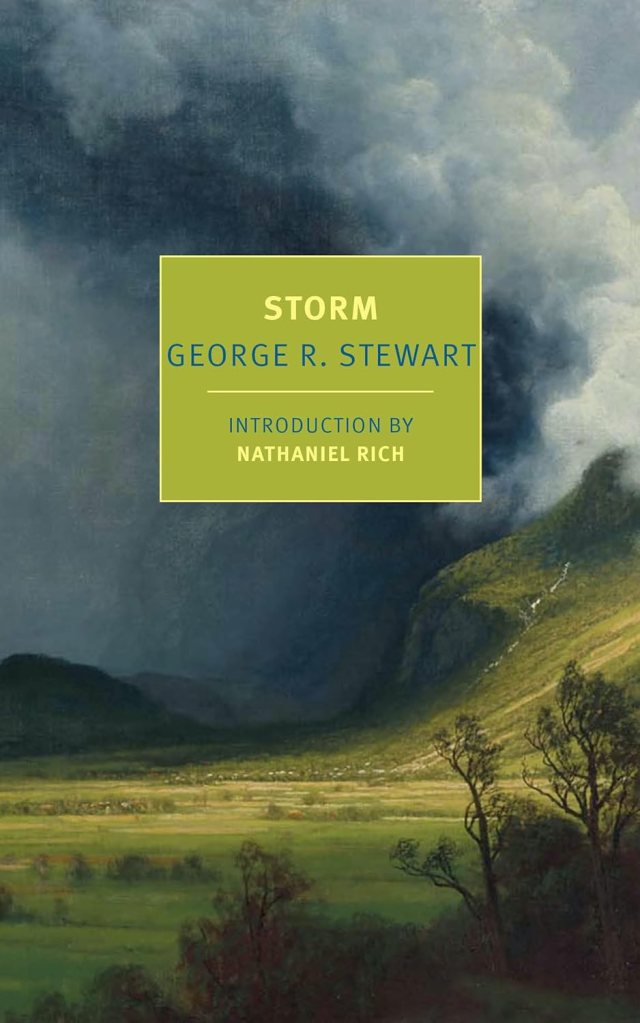
Yesterday I picked up Storm (1941) by George R. Stewart. My friend and I selected it for our next installment of Reading the World. The running joke (or rather, tragedy) is that we’ve had pretty bad luck with American novels, having read two lemons in the past. Now it’s either “three strikes and you’re out” or “third time’s the charm”!
Storm is an early ecological novel about—well, a storm. Not just any storm, but a feisty heroine named Maria (pronounced, our author clarifies, as Ma-RYE-uh). The book follows Maria’s lifespan and her impact on the people in her path. Fun fact: Stewart popularized (though did not invent) the practice of naming storms, which is why we now have the ABC-named storms.
Checkout 19
(Sidenote: I have to mention Checkout 19 by Claire-Louise Bennett. This was the book I was reading voraciously before the artificial scarcity of library ebooks removed it from my grasp. I am impatiently waiting for its return, since I’m trying to be good and not buy any new books. Even though I saw a beautiful copy of it at the bookstore.)
On the Marble Cliffs
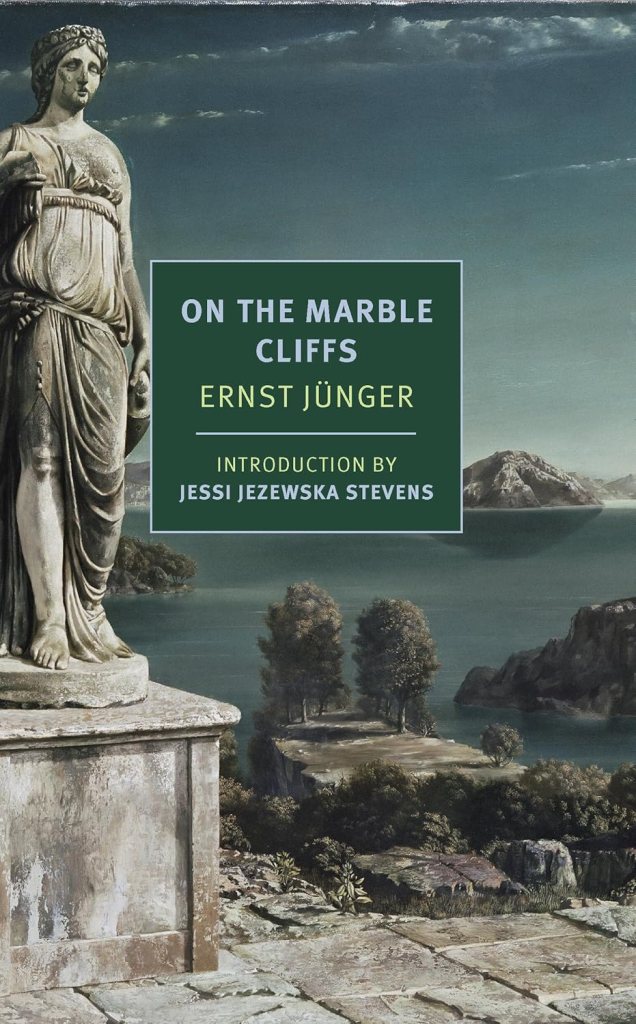
On the Marble Cliffs (1939) immerses the reader in Hitler’s rise to power, using the vehicle of German magic realism. Set in a mystical version of Europe—among wine country, amicable serpents, and boundless forests—Jünger’s work celebrates the beauty of a peaceful (even utopic) civilization, while condemning the widening reach of sadistic violence, led by a cruel man known as the Head Forester.
It is said that when you fall into the abyss, you see things with the utmost degree of clarity, as through overcorrected lenses. The air of Mauretania, fundamentally evil as it was, was the source of this sharpened vision, although with a hint of fear. When terror reigned, that is when the chill of thought and spiritual detachment increased. In the midst of catastrophes, good humor held sway and jokes abounded, like the jests of casino owners about the losses suffered by their clientele.
I can’t stop the nagging feeling that this novella is a literary brother to Anna Kavan’s Ice (1967). Ice was published 20 years after the first English translation of Marble Cliffs; who knows if Kavan would have heard of it or read it. Both books, however, carry the weight of fascistic rule. The Head Forester might be another variant of the Warden.
Of all the dystopian novels I’ve read—and I’ve read most of the big ones—this novella alone lingers in the beauty of the world more than the others. Like Viktor Frankl’s description of a sunset in Man’s Search for Meaning, Jünger suggests that we might pause and enjoy the view of islands in the sea, or the memories of festivals, even while the land is being racked by war and hellish acts of terror. Perhaps the purpose is not so much to remind ourselves of what could be—for who is to say life will ever be calm again?—but to reclaim something of who we are, no matter what our circumstances.


 Classics Considered
Leave a reply to Marian Cancel reply